MEDIA FEATURE: Consultants Who Love Consulting

I’m pleased to be featured in the April issue of Consult, a publication of CMC-Canada in the Consultants Who Love Consulting section.

First things first, what is a CMC?  The Certified Management Consultant (CMC) designation is the profession’s only international certification mark, recognized in over 40 countries internationally.  It represents a commitment to the highest standards of consulting and adherence to the ethical standards of the profession.  I have held my CMC designation since 1997 and have found that it separates professional consultants from those who represent themselves as consultants or advisors, perhaps by way of having knowledge in a particular area, but without formal education in terms of the consulting process (yes, there is a consulting process, and utilizing this knowledge makes a significant difference to client engagements).  You can learn more about the CMC designation here.

So, now, here’s a bit more about my personal interest in consulting.

Early in my career, I knew that a “narrow” path of focus wasn’t for me, as I had (and continue to have) an innate curiosity about the holistic workings of a business, in terms of how all of its parts are interconnected.  Like a sports team on their field of play, success isn’t likely without the coordinated effort of all members, working in the same direction.  Too often, organizations seek “quick fixes” in a particular area, such as marketing, and wonder why their efforts are not successful and fail to achieve the desired results.  Simply put, marketing isn’t just about what goes on in the Marketing Department.

I also found myself much more interested in tangible outcomes; action that could be taken to make a company successful, as opposed to just wandering along an undefined path.  The ability to do this is tremendously powerful and separates an advisor such as myself from those who spend their time in more theoretical or long term oriented areas.  There is nothing wrong with these perspectives; they serve a different purpose.

Not surprisingly, I spent almost 10 years as an executive in the fast-paced venture capital industry, where getting things done and generating results were daily priorities.  I believe that bringing this type of experience to client companies can create a competitive edge in the marketplace, BUT, business leaders have to actually want to make it happen.  Doing so isn’t for the faint of heart, as real progress isn’t always easy and the commitment to persevere often takes much more than anticipated.   These leaders, however, know that there isn’t another option, as they are not the type to continue on their existing, less than ideal path, ignoring the obvious signs that charting a new course is needed.

Bottom line, I believe that being in business is all about opportunities, and it’s up to business leaders to make the most of them.  Those who are driven to do so wouldn’t take these steps without sound advice, from those who have “been there”, “done that”, and truly understand the tremendous opportunities and challenges that are at stake.

As a CMC, I wouldn’t have it any other way.  Anything less is, well, less.

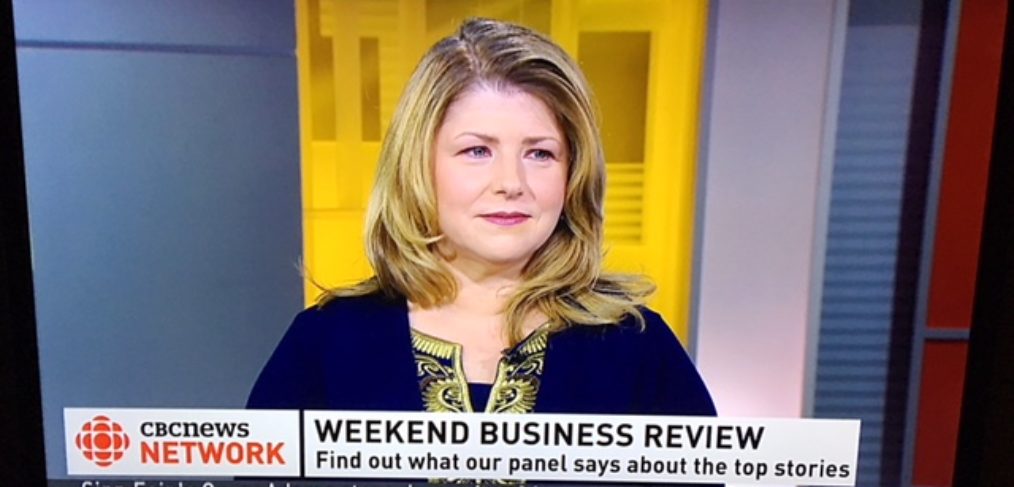
MEDIA: CBC News Network Weekend Business Panel (April, 2018)

The Winnipeg Whiteout made an appearance on the CBC News Network Weekend Business Panel this past Saturday.  It was great to be alongside Elmer Kim and John Northcott to discuss the week in business.  We chatted about:

  • Millennials Delay Home Purchases, While Budgets Shrink and Rates Rise:  Research reports and surveys are finding that, although millennials have an interest in purchasing a home, the majority lack the financial resources to do so.  Mortgage stress test rules and income levels that have been slow to increase haven’t helped matters.
  • Canadian Markets Close Early Due to Technical Problems:  All markets operated by the TMX Group closed early on Friday due to a technical glitch; the TSX, TSX Venture Exchange, TSX Alpha Exchange, and Montreal Exchange all stopped functioning around 1:37 PM Eastern time.  What are the implications for our financial and other systems, given their significant reliance on technology?

The topic of housing and millennials is one that could be discussed at length.  Although Canada’s housing market has generally seen significant price and inventory increases over the past several years, the path to ownership for millennials is impacted by a number of issues.  Rising prices and new mortgage stress test requirements represent challenges, however, so do the relatively slow increases in wage levels, impacted by a number of factors, including changes in workforce requirements and the potential for lagging career advancement rates, as Baby Boomers continue to hold onto senior roles and remain in the companies that they own.  Millennials also have a high level of interest in areas such as travel, lifestyle experiences, and luxury goods and services, making home ownership less of a priority for some.

Technology risk in large systems, such as finance, utilities, security, and information, is an area of increasing importance.  As we discussed on the Business Panel in December, 2017, concerns around the protection of information systems, including hacking, is a significant issue that is not yet fully addressed by many organizations.  Although the TMX situation has been reported as not being related to a hack, the concern relates to how integral these systems have become to our everyday lives.  Companies need to ensure that there are sufficient resources, checks, and balances in place to manage risk, and the urgency to do so is immediate.

A video link of the Weekend Business Panel is available here, including an appearance of the Winnipeg Whiteout.  As a lifelong Winnipeg Jets fan, I’m pleased to encourage everyone to join the legendary Winnipeg Whiteout, wherever you might be.  I would also invite you to check out Project 11, an important wellness initiative that means a lot to us here in Winnipeg.

Go Jets Go, and see you again soon, CBC!

MEDIA: CBC News Network Weekend Business Panel (March, 2018)

Great to be back in the studio this past weekend alongside Elmer Kim and John Northcott to discuss what was a hectic week in business.  We chatted about:

We also discussed a late breaking tweet from Donald Trump, taking aim at Amazon for creating alleged losses at the US Post Office (more on that later).  Let’s talk about the business stories first.

It’s no secret that the workplace has changed, driven by evolving requirements.  Where the focus has traditionally been on jobs, remaining globally competitive also requires “human skills”, well beyond that of technical ability.  Businesses have a need for employees who can fulfill a range of important areas, including collaboration, communication, critical thinking, and creativity, all of which seem to have fallen by the wayside in a world where technical skills have been so important.  Staff members who have the ability to “bridge technology and humanity” will be of considerable value, as not everyone has the capacity (or desire) to do so.  Regardless of how this trend is considered, there is a shortfall of people who have the ability to meet the needs of a workplace in demand of digital literacy, as well as “digital thinkers”, a skill set that is so different from programming and coding.

In many respects, this skills shortfall is a reflection of leadership, in that senior teams in companies and organizations are not just responsible for present day requirements, but also for future needs.  Too many business leaders spend their time consumed by operational activities and internal matters, as compared to understanding industry and market trends and developments.  It is critical that future needs be fully understood so that strategies can be identified and put in place to ensure survival into the long term.  This situation is one that business leaders and boards of directors need to be addressing immediately.

The current situation at Tesla is an example of both sides of the entrepreneurial mindset.  Entrepreneurs are successful due to their creativity, vision, optimism, and relentless belief in their product or service.  The difficulty occurs when lofty objectives do not come to pass, given that the implementation process can significantly differ from the vision of what is possible over the long term.  Many entrepreneurs don’t excel at managing expectations, which can be particularly damaging to their companies in the investor world and public markets.  In the case of Tesla, the story could have been a lot different had progress and targets been conveyed more strategically, in addition to how building capacity was approached (much more could be said about this!).


And finally, it wasn’t a quiet Saturday morning in the Twitterverse, as Donald Trump took aim at Amazon, claiming that “…the US Post Office will lose $1.50 on average for each package it delivers for Amazon…”, among other things.  In continuing to target parties (and people) based on alleged information, personal views, unsubstantiated claims, and/or media beefs, Trump’s comments have already moved markets, resulting in billions of dollars being lost, at least in the short term.  This ongoing behavior does little to raise the credibility of the messenger, who seems more interested in demonstrating that his comments have market impact, rather than the underlying implications of doing so.

It’s a reasonable expectation that a country’s leader should be encouraging corporate growth and success, to the benefit of employees and the broader economy, however, what’s occurring in the US has strayed from this path.  Regardless of Trump’s claims, don’t expect the US to return to the traditional economy of the past anytime soon.

Thanks for watching!

Brands that Aim to “Super-Please”

It’s not too often these days that a brand steps up and takes action to “super-please” its customers, but one of my favourite brands, Babor skincare, did just that for me recently by sending me the most wonderful package of their products.  I’ve loved great skincare products for most of my life and they are especially important these days, given the TV work that I do (in an HD world, no less!).  Regardless, who doesn’t love skin that looks and feels great every day?


I’ve been using Babor for a while now and here’s a look at the products I will be trying and commenting on (via my Instagram page) over the next while:

  • Cleansing HY-OLa cleansing oil for all skin types.  With oil-based cleansers being all the rage these days, Babor has combined the natural cleansing powers of water and oil and developed a unique bi-phase, deep action cleanser that promotes skin vitality.
  • Phytoactive Sensitivethe treatment phase for cleansing with HY-OL, containing herbal essences tailored to sensitive skin types, designed to refresh and lend radiance.  Since I love scent, I can’t wait to try this relaxing product.
  • Rejuvenating Face Oil, a newly launched product designed to give skin an extra boost.  Inspired by Dr. Babor’s research on lipids and by the black rose, this luxurious face oil lends new radiance to the skin.  Looking forward to trying this product, as face oils provide such great moisturizing benefits.
  • Hydra Plus Active Fluid, from Babor’s luxurious ampoule collection, Hydra Plus provides a moisture boost to dry and dehydrated skin.
  • Algae Active Fluid, another powerful ampoule, bringing the benefits of the sea to dry, dull skin.
  • Ampoule Advent Calendar, and finally, Babor’s festive Advent Calendar featuring 24 ampoules from its collection, resulting in healthy, hydrated, and glowing skin, just in time for the Holidays.  Who says we can’t celebrate all year long?

I definitely have my Babor favourites, but I’m looking forward to adding some new products to the list.  Brands that go out of their way to let customers know that they truly matter are more than worthy of a mention, and I’m pleased to do that here.  Thank you so much!

MEDIA: CBC News Network Weekend Business Panel (February, 2018)

Fun discussion this past weekend with Natasha Fatah and Elmer Kim on the CBC News Network Weekend Business Panel.  In a busy segment, we discussed the week that was, including:

Falcon Heavy, Spacex, and Tesla’s Wild Ride:  With the breathtaking launch of the largest rocket in history, what does this mean for the future of space exploration?  With a Tesla Roadster being launched into space, could the Company’s future reach similar heights?

The Cost of Raising the Next Generation of Olympic Athletes:  As the 2018 Winter Olympics commence, what are the financial implications of rising to this level of competition?  Can Olympians bank on endorsements after they have represented Canada at sport’s highest level?

As a life long space enthusiast, all aspects of the Falcon Heavy launch are not only exciting, but also fascinating from a business perspective.  Since humans are explorers at their core, traveling beyond our world and seeking to understand it are within our DNA.  Advancements such as more robust space exploration at a much lower cost, the ability to re-use components, and greater functionality are to be celebrated, not to mention the phenomenal release of that Tesla Roadster!  Expect far more in the future, including a variety of projects and the Mission to Mars, and hopefully further advancement of rockets and air travel right here on Planet Earth.

And speaking of Earth, Tesla has some definite work to do in resolving its operational issues and increasing its Model 3 production.  What’s important to remember is that the Company is moving from a niche manufacturer to “mass production”, which represents a very different business.  When this occurs, companies can face a host of growth related issues, many of which are not glamorous and require a lot of analysis and hard work to resolve.  Critical to doing so is having the right people in place to get the job done, and advisors can help to move the growth strategy forward.

For many athletes, the pinnacle of their careers is completing on the global stage, something with which the Olympics is synonymous, but getting there in financial terms can be just as challenging.  Although some funding is available, what’s often needed is taking a broader approach, including donations, sponsorships, scholarships, and even crowdfunding.  The earlier that high potential athletes and their families can start planning, the more resources that can be identified.

We had hoped to chat about the Dow’s wild ride of its own, but time was short on this busy news day.  As always, thanks so much, CBC, and see you next time!


Lifting Off to a Whole New Level of Teamwork

In honour of today’s historic Falcon Heavy launch, here’s a new spin on lessons learned from Canada’s Astronaut.  I was fortunate to meet him not that long ago and his perspective was inspiring and highly relevant to the business world.


I recently attended the Canadian Venture Capital Association’s annual conference, of which I have been a longstanding member.  Although there was a lot of great information to utilize and reflect upon, I found the comments of Colonel Chris Hadfield, “Canada’s Astronaut”, to be particularly insightful.

Although paraphrased and representing just a portion of his powerfully illustrated keynote address, here are some concepts that especially resonated with me:

  • How are you going to finish and what are you going to do next?  When considering any achievement, it’s important to think about the task at hand, recognize where you need to “get to”, and what it will take to finish strong.  The power of the words “finish” and “strong” is not lost on those who excel, but is often not well achieved (or fully understood) by others.
  • What does success look like and are you prepared to achieve it?  Visualizing successful outcomes and practicing the skills that are required in order to get there can greatly reduce the risk of failure.  Be clear on what it will take to cross the finish line, visualize it, and practice every step.
  • What does failure look like and how can it be avoided?  Visualizing failure requires a thorough understanding of it and getting to this point often isn’t easy.  Ask yourself if you have enough knowledge in order to resolve it, should failure loom.  Having said that, “the beauty of failure is that it is deep in learning”; such a powerful concept.
  • Teams need special attention. Words and communication alone are not enough.  Having a shared vision of what success looks like, watching for changes in actual behavior (not just talk!), and celebrating success often can help to bring a team together to achieve great things.

These areas are fundamental for individuals who strive for success and are essential, in the case of teams.  How true this is when considering the pioneers of space, who often only have each other to rely upon, including identifying and resolving problems.  Although astronauts train extensively to address challenges, it doesn’t mean that trouble arrives with advance notice.

Considering life and death, mission critical situations should make everyday teamwork seem much more attainable; but why is it often so difficult?  Perhaps the answer is found by reflecting on one final thought: Impossible things happen; do something unprecedented.

I’m ready to board, are you?

MEDIA: CBC News Network Weekend Business Panel (January, 2018)

Happy New Year!  Back in the studio this past weekend for the CBC News Network Weekend Business Panel with John Northcott and Elmer Kim.  We discussed the week in business, including:

  • NAFTA and Mixed Signals from the US.  First, Trump says the US might pull out of NAFTA; next, he says the talks are moving along well and he might extend the deadline.  What could be in store for Canadian businesses?
  • Tim Hortons and Minimum Wage.  Canada’s favourite coffee shop has faced a backlash over how some franchisees have responded to minimum wage increases in Ontario.  What are the implications for the brand and lessons learned?

Both of these stories have received a significant amount of public and media attention.  Here’s a quick take:

  • In terms of NAFTA, it’s no secret that Trump’s target of dissatisfaction has been Mexico, and that Canada and the US are significant trade partners.  Bringing an end to NAFTA isn’t as easy as some might think, and regardless, Canada and the US need a basis to do business together, whether it is under NAFTA or some other arrangement.  Canada should be focusing on its global trade strategy, as well as its options for trade with the US.  Canadian businesses, on the other hand, should be focusing on the significant work that needs to be done in order to approach global opportunities.  Talking to a business advisor is a great first step!
  • The Tim Hortons saga is a good example of what can happen when important business and implementation planning are not managed well.  This type of situation can also be impacted by a lack of communication: between a company and its franchisees (or locations), employees, and customers.  And as for the public sector, we can all agree that providing a fair wage is a good thing, but leaving it up to companies to implement a large increase simply isn’t a wise strategy, given that a business’ payroll is typically its largest expense.  A more gradual approach that starts sooner rather than later would have been a better idea.

Thanks for watching and see you soon, CBC!

MEDIA: CBC News Network Weekend Business Panel (December, 2017)

Great to be back in the studio for the CBC News Network Weekend Business Panel, alongside Elmer Kim and John Northcott.  We discussed a busy week in business, including:

Our world has changed so much in recent years and an area of increasing concern is security over financial systems.  Hackers always seem to be one step ahead of business and public sector systems, and although many breaches have been on a relatively isolated basis, the risk a widespread incident should be very concerning.  It’s critical to ensure that organizations have the necessary plans in place to combat this risk, as not only are their operations at stake, so are their reputations.

The ongoing saga of proposed small business tax changes has resulted in more uncertainty for Canadian companies.  Recent developments demonstrate how little those in government who are responsible for this area actually understand, in terms of how business works.  Now is the time to support companies in their growth and development, and requiring resources to be dedicated to addressing tax changes is of no meaningful value.  This is especially true, given that there is an opportunity for Canadian companies to pursue global opportunities, as circumstances in the US become increasingly uncertain.

Finally, the impact of the loss of US net neutrality remains to be seen, but it’s fair to say that a lack of fairness is never good.  Expect legal action and other delays to keep this situation percolating for a while.

Thanks very much, CBC.  See you in 2018!

MEDIA: CBC News Network Weekend Business Panel (November, 2017)

It was my pleasure to appear on the CBC News Network Weekend Business Panel again this past weekend with Michael Hyatt and John Northcott.  We discussed the week in business, including:

The stories about the lack of female leaders in tech companies and gender inequality are discouraging, in terms of how our world should look in 2017.  Although much progress has been made, there is still so much left to accomplish.  We can all help to make strides in this area by ensuring that the companies and organizations within which we work have appropriate systems in place to support progress that is fair for everyone.  We can also support young women and girls in knowing that they can achieve anything in their lives, regardless of their gender, and ensuring that action is taken to make this happen.  Too often, companies and organizations defer to the “same old” practices, and this is an important impediment that must be resolved.  Simply put, it’s time to shatter the mold.

Much has been done to support financial literacy on a personal level, but many business leaders lack the finance knowledge that is required to build and grow a successful company.  We can help entrepreneurs and business leaders to understand what they need to know, setting them apart from others.

Thanks for the opportunity to share my thoughts with your viewers, CBC!

Getting to Better Budgeting: 5 ways to up your budgeting game

Published by the Canadian Golf Superintendents Association in GreenMaster (Fall, 2017).

The very thought of budgeting can conjure up feelings of an abundance of effort for little in the way of outcomes.  Ask people how successful they are when it comes to meeting (or beating) their budget and many will say “not even close”.  Suggest that a budget should be prepared before getting started with a new fiscal year or venture and the response might be “we can’t predict the future, so why bother?”.  And when all else fails, there’s always the familiar excuse of “nobody looks at those things anyway”.  These viewpoints are more common than one would expect, but actually, they are far from accurate.  Why is this the case?

The simple reason is that budgeting is a learned skill, and practice makes it better.  When considered in this context, here is what the comments above actually mean:

What They Said Translation
“Not even close”

The budget wasn’t reasonable.

We didn’t pay enough attention to the budget once it was developed.

“We can’t predict the future, so why bother?” We don’t know enough about our organization to prepare a meaningful budget.
“Nobody looks at those things anyway” We don’t understand budgets.

Experienced advisors know these misconceptions all too well, and the only way to overcome the challenges of budgeting and improve outcomes is to take action.  This means implementing a sound budgeting process, upon which an organization can build over time.  Here’s how:

  • Assign the right resources: Those who are responsible for conducting the actual budget work should have relevant experience, including a professional accounting designation.  Since budgeting is a specialized area, in the event that an organization’s staff members have not previously conducted budget work, the necessary training and education should be provided in advance.  Advisors can also be helpful in this regard.
  • Have a game plan: Developing a budget doesn’t just happen, and it’s important to have an action plan that identifies all critical activities, timing, and responsibilities.  The budget should have a standard format, including an Income Statement, Balance Sheet, Cashflow Statement, as well as supporting schedules and assumptions that provide the rationale for how amounts were developed.
  • Engage the senior team in the process: A budget shouldn’t be developed in isolation, such as by an organization’s leader or the “Accounting Department”.  This approach can result in those on the senior team taking the view that the budget “doesn’t belong to us”.  In order to avoid this scenario, all members of the senior team should be involved, by way of developing the budget assumptions that pertain to their area, as well as review of drafts and finalization.  This approach gets everyone on-side, making the budget that of the organization and its team.
  • Draft, review, and revise: Budgets don’t typically come together on the first try, so it’s important to prepare a draft version, review and critique it as a team, and revise where required.  This process might take a few drafts, but it is rich in learning for everyone involved.
  • Implement and monitor over time: A budget only means something if it is formally implemented and monitored over the full period to which it pertains.  Common mistakes include developing a budget and either not formally implementing it (so people think it doesn’t matter) or failing to compare actual performance to budget on an ongoing basis.  Either scenario leads to poor outcomes.

The good news is that the work is in getting started and these efforts can be leveraged over time, through re-use and enhancement of what has already been put into place.  Starting now creates the opportunity to get on the path to making the process easier sooner.  What’s more, the good performance that can be generated will add some distance to your game.