MEDIA: CBC News Network Weekend Business Panel (July, 2023)

Extremely busy news week on the Canada Day edition of the CBC News Network Weekend Business Panel, alongside Mark Warner, Elmer Kim, and Hillary Johnstone, talking the lack of grocery competition in Canada, cyber attacks, and the latest economic numbers; you can watch our segment here.

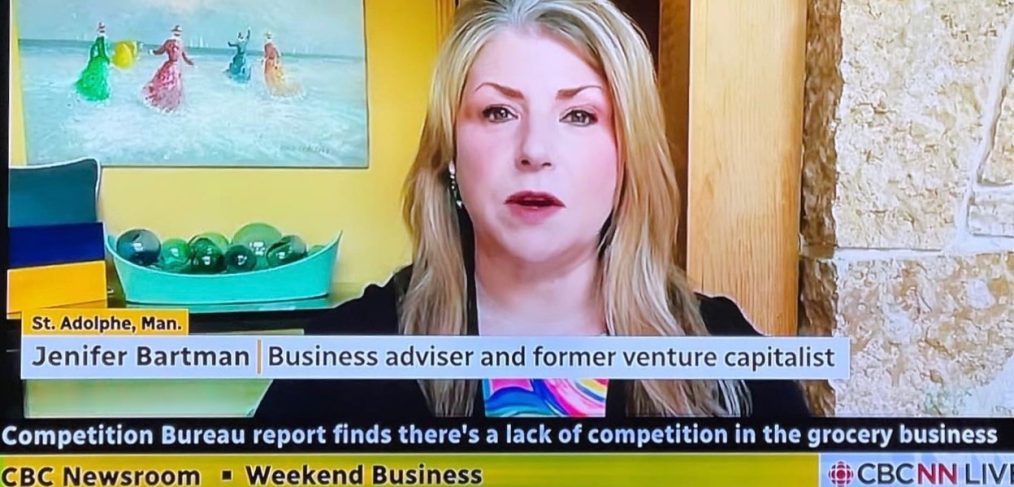
Some thoughts on our discussion.  Canadians might think they have a range of grocery shopping alternatives, but a closer look indicates that most familiar brands are owned by a few large players (think Loblaw, Sobeys, and Metro).  The latest Competition Bureau report addresses this situation, with a number of important considerations for improvement, as well as some thoughts on the challenges of increasing the number of players.  Shining a light on the lack of competition comes at a time when Canadians may well be feeling sour on this topic, with reports of record profits and executives seeking compensation package increases.  In addition, consumers are undoubtedly already experiencing budgetary challenges, as inflation and interest rates have risen over the past year.  Although mandatory unit prices and better transparency at the consumer level can be helpful, the challenges of attracting foreign players are of note; these may include addressing bilingual and metric packaging requirements, as well as identifying the right business model.  Numerous retailers from other countries have found out the hard way that the Canadian marketplace has specific requirements (Target and Nordstrom come to mind) and it can also be difficult for smaller players to make an impact.  What happens next in this respect is anyone’s guess; a closer eye from regulators/consumer protection agencies could be an opportunity for a meaningful step, especially when it comes to addressing any bad behavior.

Many established companies and organizations have been impacted by cyber attacks, with Indigo and Petro Canada being a couple of the latest.  Businesses of all sizes need to consider the impact of this unpredictable and damaging situation, as the ramifications can be significant, including lengthy downtimes and expensive resolution paths.  Business leaders should be asking themselves a number of questions in terms of their company’s level of preparedness, including:

  • Has the company engaged a qualified information technology advisor to address this issue?
  • Is a comprehensive security plan in place?
  • Are staff members sufficiently trained?
  • Has the company explored and obtained cyber event/business continuity insurance coverage?
  • Does the company’s leadership understand what is covered by insurance and what the risks are?
  • Is the company’s security plan reviewed on a regular basis?
  • What business continuity plans are in place, in the event of a cyber attack, including in terms of customer communications?

The reality is that many companies are not well prepared in this regard, be it due to a lack of understanding of this complex issue or qualified advice, as well as the fast pace at which risks emerge.

In terms of recent economic news, modest growth over the past couple of months has Canada moving in the right direction.  As indicated on previous Business Panels, progress will not happen in a straight line, but points in time should be taken as information, paying close attention to any trends that may become apparent.  In my view, this is a good time for the Bank of Canada to pause on interest rate increases, so as to not “oversteer” on the road to recovery.  Business leaders continue to deal with many front line challenges, and a balanced approach is better than upheaval (even when unintended).

A Happy Canada Day to all of our viewers, and thank you for watching!
MEDIA: CBC News Network Weekend Business Panel (June, 2023)

Another busy week on the CBC News Network Weekend Business Panel, alongside Mark Warner, Michael Hyatt, and Natalie Kalata, talking concerns about artificial intelligence, Air Canada pilots taking early steps to negotiate their next labour agreement, and BMO’s acquisition of Air Miles.  You can watch our segment here.  Some thoughts on our discussion.

Various science, academic, and technology leaders issued a warning about artificial intelligence (AI) and its potential to harm humankind with the following statement: “mitigating the risk of extinction from AI should be a global priority alongside other societal-scale risks such as pandemics and nuclear war”.  This has resulted in discussion about how AI could harm the public (such as through disinformation and privacy issues) and has raised questions about what should be done.  In general terms, it stands to reason that since parties/companies that develop and commercialize products (including technologies) tend to benefit financially (sometimes, quite significantly), they should also play a role in addressing any negative impacts.  This is analogous to issues such as pollution and the downside of social media, for example, something that has been unaddressed for too long.  It is not sufficient to engage solely in “finger pointing”, typically at government, for an ineffective regulatory environment (or none at all); rather, industry has a key role to play in identifying, assessing, managing, and mitigating risks, given that they have the expertise to do so.  Further, no one benefits from an industry that causes significant harm and there is a responsibility to ensure that this doesn’t occur.

As Air Canada’s pilots opt to pull out of the existing labour agreement early to commence the bargaining process (perhaps, in the Summer of 2023, with the current contract set to expire this September), travelers are likely on edge, particularly given the fallout from the recent near-strike at Westjet.  The unfortunate truth is that Canadian travelers are in a less than ideal position, given the very limited airline options in this country.  Speaking as one of the many travelers impacted by the Westjet strike, despite being told that the flight would not be cancelled due to the labour dispute (false), there is no sufficient compensation when life events are missed, often accompanied by significant frustration and disappointment.  Reviewing the communications by the company, the lack of customer focus is obvious, with commentary priorities being primarily Westjet and its pilots.  At its core, these situations are internal human resource matters, and in a typical competitive marketplace, companies don’t survive for long if customers are not their top priority.  Customers simply want to receive what they purchased, with reasonable quality and in a reliable manner; this is not too much to ask.

BMO Financial Group announced its acquisition of the defunct Air Miles rewards program, indicating that improvements are on the way.  Given the many rewards program options available to consumers, it is likely that people select the ones that best meet their needs and bypass the rest, setting the stage for an uphill battle to reinvent Air Miles.  There is also a need to attract more vendors to participate, and companies are only likely to do so if they see a meaningful opportunity to increase business.  Will have to wait and see what BMO has in store and whether or not consumers and vendors will engage.

And, finally, it was my pleasure to join the Biz Panel from beautiful Nova Scotia once again, albeit in the face of difficult times for many, given the devastating forest fires.  Being in proximity to two forest fires has certainly been concerning, and I have been thinking about those who have been impacted over the past week.  Sincere thanks to all those who have been working so hard to keep our communities safe.

MEDIA: CBC News Network Weekend Business Panel (March, 2023)

Pleased to join the CBC News Network Weekend Business Panel, alongside Chris Glover and Elmer Kim, talking the closure of Nordstrom stores in Canada, increasing cell roaming charges, and Tall Poppy Syndrome (what’s that?, you ask; keep reading).  You can watch our segment here.

Some thoughts on our discussion.  As much as the business world is changing, there is always a degree of humbling when large companies (or parts of them) fail.  As Nordstrom announced the closure of its Canadian stores this week, perhaps the most telling aspect of this development is the fact that its operations here have never been profitable.  This suggests that what is at play is more than the impact of relatively recent factors such as inflation, COVID19, and the changing face of retail.  Business fundamentals are important for companies of all sizes, including conducting targeted market research, comprehensive business planning, identifying the right business model, and rolling out the launch properly.  Nordstrom is not the first large US chain to fail in Canada (Target stores may be the most pronounced example), raising the question of how well they really understood the Canadian market prior to entry.

Increasing roaming charges are another expenditure facing Canadians on the move, in terms of cell phone fees that are already much higher than what is the case in other countries; numerous studies have confirmed this fact. Although much has been said about the geographic realities of Canada, it would be helpful to bring some innovation and collaboration to this issue, as well as the initiative to meaningfully address this matter.  Given the “infrastructure” nature of cellular communications, it is a reasonable expectation that fee and lack of competitiveness issues raised by consumers should be addressed.

And, finally, although you might not have heard the term Tall Poppy Syndrome (TPS) before, if you are a woman in the business world, you may have experienced it.  According to a recent study conducted by Women of Influence, TPS occurs when people are attacked, resented, disliked, criticized, or cut down because of their achievements and/or success.  The study’s findings indicate that almost 90% of respondents, including thousands of women from all demographics and professions in 103 countries, experienced this phenomenon at work.

On a personal level, I found it important to participate in this study, as respect, fairness, and equity are integral to a successful workplace.  Speaking from experience, although the majority of organizations and people do not exhibit these behaviors, too many do (and when it happens to you, someone else in your workplace, or a close colleague, it is evident).  To be clear, these behaviors should not be confused with “competition” (ambitious women say “bring it on!”); this conduct is about bias.

Related to this point, unacceptable or unprofessional conduct by others in the workplace is not the fault of the women who are subjected to it; rather, inappropriate behavior defines those who exhibit it.  Why?  Simply because it does not represent the norm or what is acceptable, and those who treat others in this manner might be surprised to learn that their conduct does not fade into the overall work experience.  Women should not be criticized for raising this issue either; doing so is another way of minimizing an important issue that needs to be addressed.

There is a cost associated with TPS, on both a personal and organizational level.  Business leaders, owners, boards of directors, and shareholders should care about inequitable treatment and bias in the workplace, not only from a cost perspective, but also in terms of reputation.  Keep in mind that this behavior can and does also happen in places where it might not be expected, including in large companies and those associated with “prestige” or brand recognition.  Learn more about TPS and the study findings from the infographic below.

Thanks for watching and see you again soon!

MEDIA: CBC News Network Weekend Business Panel (February, 2023)

Pleased to join the CBC News Network Weekend Business Panel, alongside Mark Warner and Hillary Johnstone, talking high grocery prices, the US Federal Reserve interest rate increase, and ChatGPT’s subscription plans; you can watch our segment here.

Some thoughts on our discussion.

It’s no secret that rising prices have been challenging for consumers in recent months, especially at the grocery store.  And now that price freezes have concluded, many consumers are wondering when they might see some relief.  Although inflation rates have declined in recent months, it is expected to be a while before “near normal” levels will occur, which means that shoppers have a need to keep time tested advice in mind: make a list, be flexible in choices, focus on buying what is needed, and shop around.  As the Summer months near, we will see some additional produce choices in the marketplace, which could be helpful.  Having said that, it isn’t too late to start your own garden preparations, as seed displays begin to appear in stores!

Speaking of inflation, the US Federal Reserve slightly raised interest rates this past week, but unlike Canada, did not indicate a pause in rate hikes.  Although our countries are closely connected, in terms of business relationships and trade, there is something to be said for stepping back to observe how rate increases impact not only the economy, but also companies.  Business owners deal with a tremendous amount of practical, real world challenges on the front lines of their company on a daily basis.  Although inflation also affects companies, in terms of the goods/supplies that they purchase, they are also impacted by rising labour costs and interest rates, by way of debt and financing obligations.  It is important to balance increasing rates to combat inflation with adverse impacts to business in other areas, keeping in mind that the implications are often not immediate and there is a danger in “oversteering”.

And, finally, as ChatGPT continues to attract attention, will it be able to access subscriber money, to the tune of $20 USD per month?  There is a need for people and technology to work together to be more productive, in terms of business applications, however, as consumers choose carefully about where to spend their money in challenging economic times, paid subscribers may be elusive over the longterm (building a sustainable customer base is so important for companies!).  This technology has some applications, however, expect a number of real life stakeholders (such as those in the business world) to require more robust solutions.

Thanks for watching and see you again next time!

MEDIA: CBC News Network Weekend Business Panel (January, 2023)

A new year, another appearance on the CBC News Network Weekend Business Panel; this time, alongside Dennis Mitchell, Christian Bravo, and Chris Glover, talking inflation rates, possible changes to mortgage guidelines, and business succession (of particular relevance for small business owners!).  You can watch our segment here.

Some thoughts on our conversation.

The rate of inflation announced this week in the US indicates a continued decline over the past six months; what does this mean?  It’s important to remember the need to step back and consider in context, as this allows trends to be identified, even if only on a preliminary basis.  Although six months of inflation rate declines can be reasonably considered as a trend, it is important to recognize that the timeframe is short term in nature (less than one year), and that rates may vary slightly from month to month (real life isn’t always a straight line).  Further, much of the most recent decline can be attributed to falling gas prices, so it will be important to monitor movement in this regard in the coming months.

Further, as the US is expected to reach its debt ceiling this week, it remains to be seen how Congress will address this issue in the coming months.  Failure to raise the debt ceiling could result in confidence issues, which can lead to economic and financial risk.  While business lives in the practical world of the direct impact of rising prices, a tight labour market, and ongoing supply chain challenges, politics can get lost in the theatre of partisanship, holdouts, and tradeoffs; stay tuned.

As interest rates continue to rise, Canada’s top banking regulator is considering tightening mortgage rules.  Although it makes sense to manage risk in areas where households in situations of significant debt and mortgage amounts, a balance is needed to ensure that those who should reasonably qualify for a mortgage are able to do so.  It is not helpful to create additional stress on the rental market, or to slow reasonable home sales in a manner that could also impact the construction market.  Rules can sometimes have unintended consequences, so understanding the practical realities is important, prior to development and implementation.

And, finally, a recent (and familiar) report from the Canadian Federation of Independent Business indicates that 76% of owners plan to exit their businesses within 10 years.  As a business advisor and author of Defusing the Family Business Time Bombthis headline is not surprising, as reports over the last decade or more have had similar findings.  A few things to think about on this topic of critical importance to business owners and Canada’s economy:

  • Unless a business leader has bought and sold several companies, they tend to have little experience in the areas of succession and transition.
  • These studies tend to find that only a small percentage (in the single digits) have a formal, written succession plan.  While some have an “informal plan”, the majority of business owners tend to indicate that they do not have a succession plan.
  • For numerous reasons, succession planning should commence years in advance of the time of transition (a minimum of three to five years) and it is critical to demonstrate a track record of “good to great” financial performance (over years, not months).  Keep in mind that companies that are able to generate a strong exit value (i.e., sales price) have a track record well in excess of the norm.
  • Qualified successors/acquirers with the necessary capital to undertake a transaction are limited, which makes business succession competitive.  This is something that business owners tend to underestimate.

Advisors can help, and the sooner that business owners put a priority on succession planning, the better (a new year is a great time to start).  Thanks for watching, and see you again soon.


MEDIA: CBC News Network Weekend Business Panel (November, 2022)

Another busy week on the CBC News Network Weekend Business Panel, alongside Jeanhy Shim and John Northcott, talking layoffs at Meta, the collapse of crypto platform FTX, increasing financial strain, and more; watch our segment here.


Some thoughts on our conversation.

Although businesses with emerging ideas can be exciting places to be, one of the challenges is that the plan to make these ideas a reality is not always as well developed as it should be.  When opportunity appears, growth companies have a tendency to put resources to work first, which could include hiring people without fully understanding the necessary roles, skillset, and quantity, as well as allocating funds to a range of areas.  Before long, a lot of money could be spent, and without sound project management, these initiatives tend to drift and may not fulfill what was initially envisioned; they can also run well behind expected timelines.  A company’s core business can also suffer, while focus and resources are allocated elsewhere, resulting in problems in various areas.  These situations can “snowball” and become quite significant,

Some might think that this scenario would primarily occur in smaller businesses, however, this can happen in any size of company, where growth gets ahead of good planning (analogous to the cart before the horse).  The Meta layoffs raise the question of how well the “metaverse” plan was established, resourced, and managed, and also brings to mind the importance of market timing, in terms of the extent to which consumers are ready for what companies develop or are planning to bring to the marketplace.

The FTX collapse is a reminder that the crypto sector is one of high risk and brings to mind the pitfall of thinking that all companies associated with a novel business category are “winners” (examples of this were also seen in industries such as technology and the internet).  High risk businesses include those that have a limited track record, weaknesses in areas such as governance and oversight, and thin business models; they also tend to have people in leadership roles with limited experience.  This story is a reminder to keep risk considerations in check, especially in those “seems too good to be true” situations.

And, finally, as inflation rates remain high and interest rates continue to rise, there is no doubt that Canadians are feeling the stress of the situation.  Over the past couple of years, a drive around many communities is all that was needed to recognize empty office spaces and companies that were no longer in business; this includes job losses.  Despite a tight labour market, moving one displaced employee to a vacant job is not always feasible, making solvency difficult for some Canadians.  It is important to recognize that, like COVID, our economy may not reach brighter days for a while, despite our best hopes.  This is an important area to continue to monitor, for consumers and businesses alike.

It was a pleasure to join this week’s Business Panel from beautiful Nova Scotia!  Thank you for watching and see you again soon.

MEDIA: CBC News Network Weekend Business Panel (October, 2022)

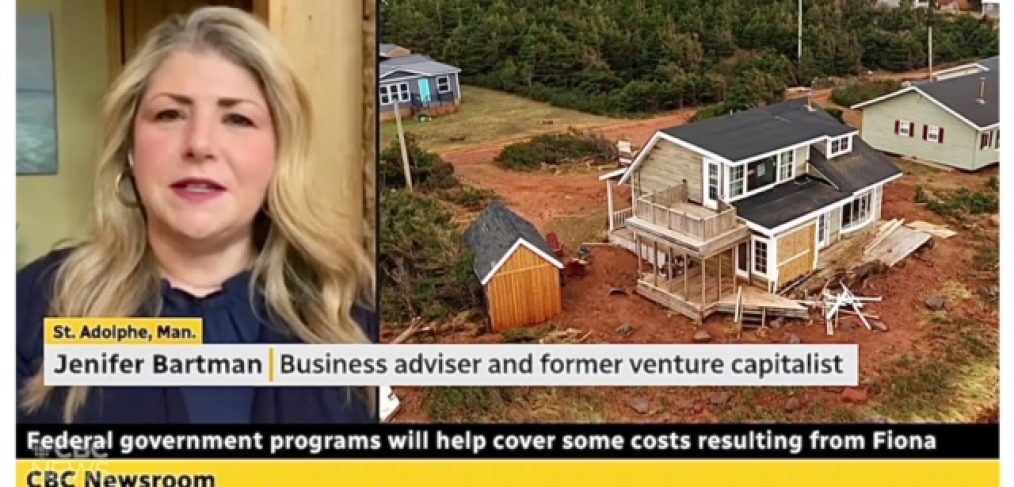
Pleased to join the CBC News Network Weekend Business Panel on a busy news week, alongside Jeanhy Shim, Gareth Watson, and John Northcott, talking the impact of Hurricane Fiona and changing travel rules.  You can watch our segment here.

A few thoughts on our conversation.

Hurricane Fiona has brought significant damage to Atlantic Canada, including Nova Scotia, a place that has been close to my heart for many years.  Although the human toll and importance of personal safety are top of mind, our discussion (being the Business Panel) focused on business.

There are many aspects of how disasters and challenges that have the potential to impact business for any period of time can be problematic.  Despite technological advances and increases in remote work arrangements, companies of all sizes tend to generate a lot of paper; this is especially the case for small businesses.  When disaster strikes, it is a good reminder to think about the ease with which a company could continue to operate, in the event that “the office” could not be accessed for a period of time, is damaged, or worse.  Here are a few things for business leaders to think about:

  • What information is critical to the company’s operation?  Where is it stored (i.e., online, paper, both, etc.)?
  • Does the company have online systems that are secure and operating well?  Consider areas such as accounting, banking, staffing, payroll, sales, customer service, operations, etc.
  • Does the business leader have access to critical information in the event of a disaster?  Consider areas such as insurance, banking, financial information to complete claims and support applications, etc.
  • Does the company have a communications strategy in place for contacting staff members, customers, suppliers, and other stakeholders?
  • Does the company have a plan and strategy for continuing to operate, where possible, such as through remote operations or an alternate location?
  • Does the company have a list of alternate suppliers, in the event that existing vendors are unable to fulfill their role?
  • Does the company review its insurance coverage on at least an annual basis?  Business continuity insurance is an area to discuss with qualified insurance advisors, among others.
  • What areas of the business still need to be migrated to an online solution?  In other words, what is in all of that “paper” anyway, and what are the areas of priority that need to be addressed?

This is an important area and something that will not be resolved in a day or two for most companies.  Advisors can help business leaders work through the detail to developing and implementing a plan to resolve this problem.

We also discussed the travel industry, in terms of the impact of rising costs/inflation, the removal of some COVID19 related travel requirements, and airline services from new providers.  While rising costs are expected to have an impact on spending in range of areas, some travelers will likely be looking for ways to make their money go further.  Tactics could include shorter duration trips, lower cost destinations, or traveling with others to make the most of accommodation dollars.  Given that the travel industry has struggled during the pandemic, it will be interesting to see whether the relaxing of restrictions such as masking on planes are an attraction or detraction for travelers, as COVID numbers rise in some areas.

And, finally, here are a few photos of beautiful Nova Scotia; thinking of everyone in Atlantic Canada who has been impacted by Hurricane Fiona and hoping for calmer seas ahead.  Thanks for watching.

MEDIA: CBC News Network Weekend Business Panel (September, 2022)

Pleased to join the CBC News Network Weekend Business Panel on what has been a somber news week, alongside Dennis Mitchell and John Northcott.  The passing of Queen Elizabeth on September 8th brought a different tone and perspective to our conversation.  While Canada continues to find its way forward after what has hopefully been the worst of the global pandemic, inflation, rising interest rates, supply chain issues, and a tight labour market are all challenges.  Given the current news cycle, it is a good opportunity to step back and consider how Canada’s economy has evolved during the Queen’s remarkable 70 year reign.  You can watch our segment here.

This period has seen an incredible amount of change, from the post- World War II era to the present day digital society.  Canada has long been known as a resources-based economy, however, one of the major developments that we have seen over the past decades is the movement towards building a vibrant technology sector.  There are numerous aspects, including technology across various industries, such as business, consumer, medical, financial, and scientific applications, encompassing hardware, software, mobile, artificial intelligence, and more.  The impact of e-commerce platforms, for example, has significantly influenced how we live and has set high consumer expectations, requiring most businesses to get onboard or find themselves at a clear disadvantage in the marketplace.

Technologies tend to pass through various stages, from conceptual ideas, research and development, intellectual property, testing, commercialization, and ongoing evolution to keep up with changing times.  These stages require specific types of financial support, including grants, seed capital, venture capital, private equity, and the public markets, among others.  Although we have seen Canada’s technology sector develop, including companies operating on national and global levels, there is still much work to do (and capital to raise) to support this effort.  Regardless, this is an important development that has helped to strengthen the diversity of Canada’s economy and position on the world stage; these accomplishments are integral to ongoing economic growth.

I was fortunate to see the Queen in person once; she was about an arm’s length away.  Growing up, most of the people that I saw in leadership roles were men; but, there was always the Queen.  This represented a powerful role model for girls, a female leader who had a very particular and important job to do, but did it on her own terms.  Although some might not understand the significance, others will recognize the impact and importance of diverse leadership, regardless of how it might have come to pass.  As is the case with any job, it is up to the person in the role to do it well, as getting the position is only the beginning.  Thanks to the Queen for setting this example and for her service.

Thank you for watching our quick segment; it was a privilege to be part of this historic news coverage.


MEDIA: CBC News Network Weekend Business Panel (August, 2022)

Pleased to join the CBC News Network Weekend Business Panel on a very busy news week, alongside Mark Warner and John Northcott, talking inflation, Canada’s rising retirement numbers, and the state of streaming (with some big news from Disney Plus); you can watch our segment here.  A few thoughts about our discussion.

Canadians have been challenged with record inflation levels over the past several months, and it’s a popular topic of conversation on a number of fronts, including the all important question of when it will end.  Falling commodity prices in Canada and a slight easing of inflation in the US are positive developments, however, this does not mean that challenging times are over.  What tends to get lost in macro level conversations is what is occurring on the front lines, for both businesses and consumers.  A trip to the grocery store still brings some eye-opening prices, while business owners continue to face even more complex problems, including ongoing supply chain issues and labour shortages.  Both of these factors can limit the extent to which a business can operate, as well as develop and deliver goods and services.  These supply challenges tend to result in rising prices and trying to determine how much can be passed to consumers, while still generating demand (which takes us back to that consumer retail setting).  These practical issues are the realities of what must be managed on the front lines of business, and it is anything but easy.

Canada’s latest jobs numbers have revealed an interesting trend: rising retirement rates, especially by those aged 55 to 64 years.  What is important to keep in mind here is that this likely includes various groups, including those who have simply had enough and were particularly impacted by the challenges of COVID19 (such as healthcare workers and other frontline roles), business owners, and, perhaps, those who are able to live relatively comfortably (private pension plan members come to mind).  In the case of business owners, it is a reasonable assumption that many considered exiting their companies prior to the pandemic, but for whatever reason, did not do so.  A lot could be said about the typical lack of preparedness that business owners tend to encounter when attempting to sell their company, resulting in numerous closures during and after the pandemic (the empty business spaces in many communities are evidence).  Nonetheless, many may remain retired, while others might find the need or desire to embark on a new career before too long, even if only on a part time basis; time will tell how this situation will unfold.

And, finally, Disney Plus achieved an important milestone, with a slightly higher number of streaming subscribers than Netflix.  The pandemic certainly left many looking for things to do, and the streaming industry benefitted as a result.  It is important to remember that businesses and industries move in cycles, and significant growth does not continue forever.  Growing a company is very different than maintaining it, with business leaders having to find new and compelling ways to retain customers.  When customers migrate away, increasing the price to compensate is not a long term strategy, as subscribers will continue to evaluate the level of value that they derive.  Inflationary times also put financial choices into perspective, something that companies of all kinds need to recognize when making business decisions.

Thank you for watching, and enjoy what remains of these Summer days!


MEDIA: CBC News Network Weekend Business Panel (July, 2022)

Thrilled to join the CBC News Network Weekend Business Panel from my home away from home in beautiful Nova Scotia, alongside Elmer Kim and Natalie Kalata.  Our discussion included thoughts on Air Canada’s flight schedule cuts, Canada’s latest economic numbers, and the Cineplex fee that has would be movie goers talking.  You can watch our segment here, and below are some thoughts on our discussion.

The travel industry has been hard hit by the COVID19 pandemic and it’s not surprising that after more than two years, people are eager to get out and explore again.  It has been well reported that many air travel entities are short staffed, including airports, security, and airlines, resulting in numerous delays and cancelled flights.  Air Canada announced a schedule cut of approximately 15% of its Summer schedule, while Westjet proactively scaled back its own schedule.  This is analogous to making the playing field smaller, in an attempt to achieve successful operating outcomes within a larger system that has been challenged and is not able to operate at full capacity.  This situation is a good example of the many challenges of implementation, and businesses that face significant deviation from the plan can find themselves in a host of excess costs and resource drains in an attempt to recover.  It will be interesting to see the degree of operating success that airlines are able to find over the Summer, as well as what the Fall might bring.

Canada’s economy experienced a slight decline in May, as preliminary numbers indicate that GDP fell by 0.2%.  Although in contrast to earlier months, the recovery is not expected to be a straight line; ongoing monitoring is the approach that should be taken here.  Of note, the housing market continues to cool, demonstrating that interest rate hikes have had an impact, and manufacturing and construction are sectors to watch, as staffing and supply chain issues are likely to continue to have an impact.  The services sector is also one that suffered during the pandemic, and the relatively slow recovery could be a function of staffing concerns, but also consumer choice tradeoffs, as inflation continues to soar.

Cineplex’s new online ticket fee hasn’t impressed some movie goers, as the company says it plans to invest and evolve its digital infrastructure.  Although the fee doesn’t apply to all ticket purchases, such as those bought in person at the box office, it seems to be a counterproductive move at a time when entertainment and events companies should be doing what they can to welcome customers back.  It might not seem like a lot of money, but the reality is that consumers have a lot of choices, and once they are lost, it can be very difficult to get them to return.  This is an important reason why business leaders should think carefully when making decisions that impact customers directly, as well as their company’s competitive position in the marketplace.

It’s been great to join from Canada’s Eastern shore; thanks for watching!

IMG_7601